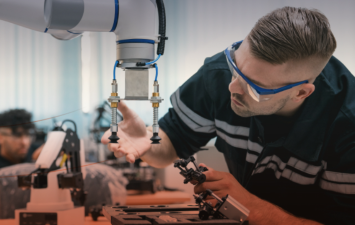
In today's rapidly developing technological landscape, artificial intelligence (AI) has transformed from a science fiction concept into a real productivity tool. However, rather than viewing AI as a "replacement," more and more industries are exploring the new model of "human-machine collaboration." This collaboration not only improves efficiency but also unleashes the unique value of humans in areas such as creativity and decision-making, becoming a key force driving social progress. As technology increasingly penetrates all levels of society, the relationship between humans and machines is shifting from instrumental dependence to collaborative progress. Machines are no longer merely tools for executing instructions but collaborators capable of understanding scenarios, participating in decision-making, and providing insights. This transformation did not occur suddenly but is a natural evolution driven by years of advancements in computing power, data accumulation, algorithm design, and interaction methods.
What is Human-Machine Collaboration?
Human-machine collaboration refers to the collaborative work and interaction between humans and robots, computers, or other intelligent systems. This field aims to combine machine intelligence with human creativity and decision-making abilities to achieve more efficient, accurate, and innovative work.
The Core of Human-Machine Collaboration
The core of human-machine collaboration lies in complementarity, not substitution. Machines excel at processing massive amounts of data, discovering hidden patterns, executing standardized tasks, and maintaining high consistency; humans, on the other hand, excel in innovation, situational judgment, moral and emotional considerations, and the integration of complex goals. The future of collaboration will involve machines handling highly repetitive, low-creativity tasks, while placing humans in more valuable decision-making and design phases. In other words, machines provide speed, accuracy, and scalability, while humans provide goal perception, value judgment, and situational control. This symbiotic relationship will permeate all aspects of corporate governance, daily work, and public services.
Application Areas
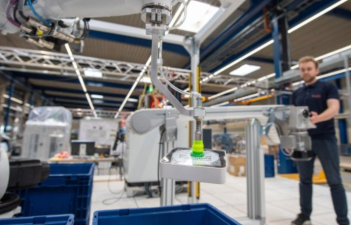
Manufacturing: In manufacturing, robots can work alongside workers to complete complex assembly tasks, improving production efficiency and reducing error rates.
Healthcare: Surgical robots can assist doctors in performing precise surgeries, while intelligent monitoring systems can monitor patients' health in real time.
Three Core Advantages of Human-Machine Collaboration
First, human-machine collaboration significantly improves resource utilization. AI systems can operate 24/7, processing massive amounts of information, while humans focus on tasks requiring subjective judgment, avoiding resource waste. Second, this model reduces the risk of human error. For example, in financial risk control, AI identifies abnormal transactions through real-time data analysis, while human experts conduct in-depth verification of high-risk cases, forming a dual-protection mechanism. Finally, human-machine collaboration provides a new path for innovation. The combination of AI's algorithmic capabilities and human imagination can break through the limitations of traditional thinking and foster cross-domain solutions.
Challenges and Solutions for Human-Machine Collaboration
Despite its promising prospects, the implementation of human-machine collaboration still faces multiple challenges. Technically, the lack of transparency and explainability in AI systems may affect human trust; ethically, defining responsibility and protecting data privacy are key issues; socially, the transformation of some jobs may create a skills gap. To address these challenges, a multi-pronged approach is needed, including technological optimization (such as developing explainable AI models), policy regulation (such as clarifying the responsibility framework for human-machine collaboration), and vocational education (such as cultivating human-machine collaborative skills), to build a sustainable collaborative ecosystem.
Future Trends: Evolution from Tool to Partner
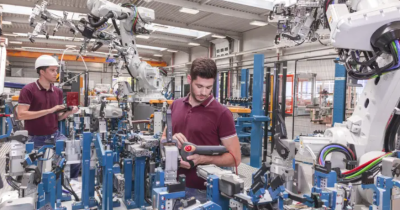
With breakthroughs in technologies such as natural language processing and embodied intelligence, human-machine collaboration will evolve to a deeper level. Future AI systems may possess enhanced environmental awareness and adaptability, enabling them to understand human intentions and proactively provide support. For example, in scientific research, AI can not only analyze data but also propose hypotheses and design experimental plans, while scientists are responsible for verification and theoretical construction. This "partnership-style" collaboration will fundamentally change the boundaries of work, propelling humanity towards higher-value domains.
Conclusion
When human-machine collaboration matures, its significance will transcend its instrumental value, becoming a new paradigm for civilizational evolution. In the cycle of "humans asking questions, AI solving problems," the chemical reaction of their respective strengths may give rise to unprecedented forms of innovation. Just as the symbiosis between artists and scientific tools during the Renaissance gave rise to breakthroughs in perspective and anatomy, future human-machine collaboration may open new paths in complex fields such as quantum computing and climate governance.
Ultimately, what we seek is not an answer to whether humans or machines are superior, but rather the construction of a "symbiotic wisdom"—allowing technology to extend human capabilities while humanity always safeguards its value compass. As the poet T.S. Eliot asked, "Where is the wisdom we have lost in knowledge?" Perhaps the true mission of human-machine collaboration is to help humanity rediscover its poetry and spirituality amidst the deluge of data.